NME Magazine on Prezi
Music Technology:
Why buy CD's when you can get music for free?!

 Less people are buying CD's...and i don't blame them. We are constantly evolving from buying vinyl records to CD's to using iPods. Vinyl records were the new thing to have but were too big to carry around so we turned to CD's, with CD's you were able to listen to the bands you loved and you were able to put your CD in your car CD player. You also had MP3 players where you could transport your music, with MP3 players you could go anywhere with them. Then came the iPod. Getting an iPod meant you could play music anywhere you wanted, iChat, get music videos, play games and go on the internet if you where in a WiFi spot. Now there are websites like Youtube Converter where you can download music illegally or Tubidy which allows you to download music to your phone without putting in a USB cable to your laptop/computer or getting a Spotify account meaning you could listen to all your playlists on your iPod, iPhone or any type of phone that allows you to have the app. Cars have many radio stations meaning you don't have to buy music to listen to the latest music and most music websites have music previews and music videos not forgetting that there are many music channels.
  My conclusion...the era of CD's is slowly dying out, it wont be long till there's yet another way to get music.

The Gentleman's Magazine, was first published in 1731, in London and has been said to have been the first magazine. Edward Cave, who edited The Gentleman's Magazine was the first to use the term "magazine".

Music Technology:
Why buy CD's when you can get music for free?!

 Less people are buying CD's...and i don't blame them. We are constantly evolving from buying vinyl records to CD's to using iPods. Vinyl records were the new thing to have but were too big to carry around so we turned to CD's, with CD's you were able to listen to the bands you loved and you were able to put your CD in your car CD player. You also had MP3 players where you could transport your music, with MP3 players you could go anywhere with them. Then came the iPod. Getting an iPod meant you could play music anywhere you wanted, iChat, get music videos, play games and go on the internet if you where in a WiFi spot. Now there are websites like Youtube Converter where you can download music illegally or Tubidy which allows you to download music to your phone without putting in a USB cable to your laptop/computer or getting a Spotify account meaning you could listen to all your playlists on your iPod, iPhone or any type of phone that allows you to have the app. Cars have many radio stations meaning you don't have to buy music to listen to the latest music and most music websites have music previews and music videos not forgetting that there are many music channels.
 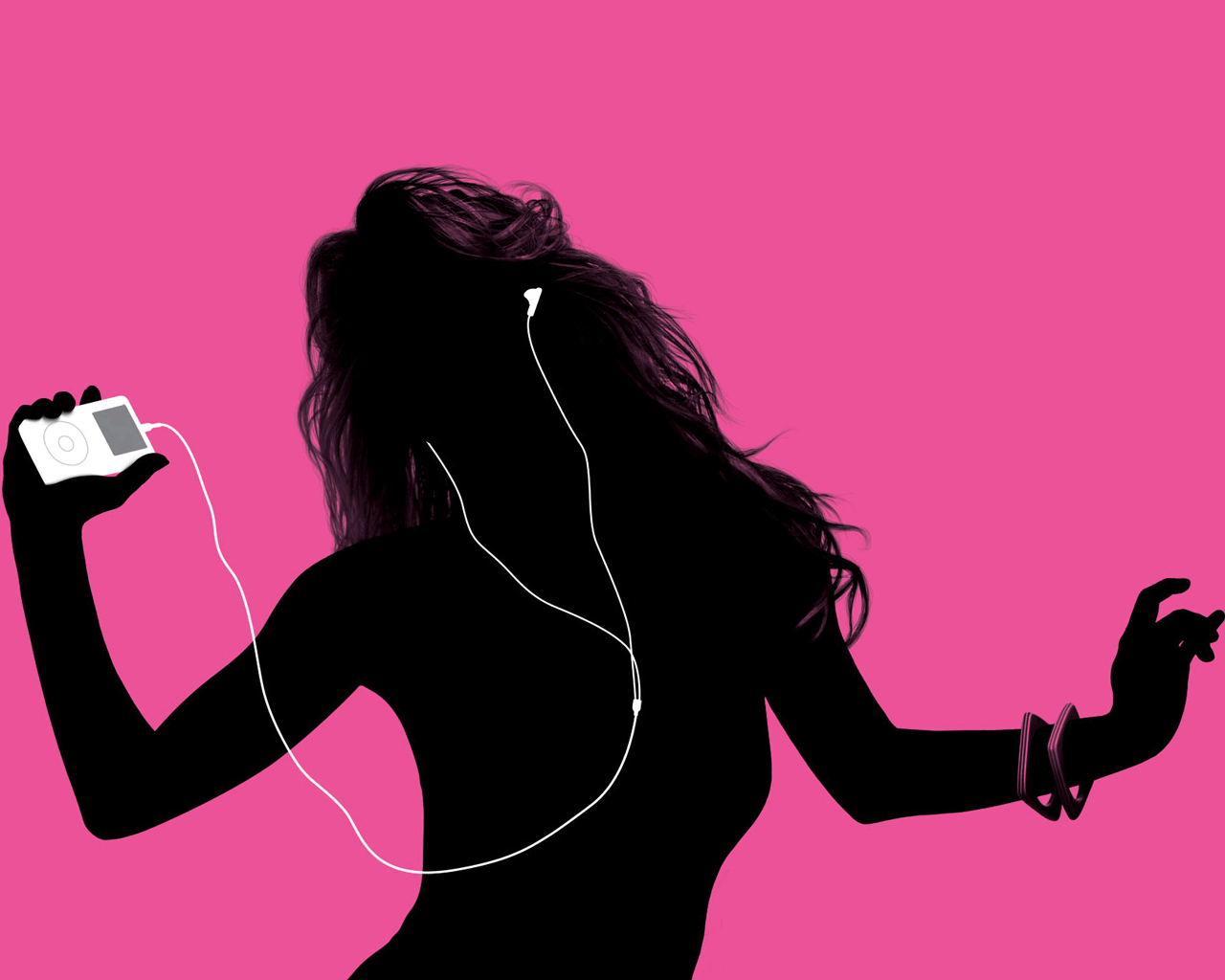 My conclusion...the era of CD's is slowly dying out, it wont be long till there's yet another way to get music.
Fanzine
Nonprofessional or official music magazines produced by fans of a certain musical genre. Created for people who share the same interest. The first Fanzine was created in the 19th century in the United States. Normally the publishers, editors and contributors of articles or illustrations don't receive any money for their work. Fanzines are normally circulated free of charge, or for a small cost for postage or production. A few fanzines have evolved into professional publications known as "prozines". Many professional writers were first published in fanzines.Magazine

The Gentleman's Magazine, was first published in 1731, in London and has been said to have been the first magazine. Edward Cave, who edited The Gentleman's Magazine was the first to use the term "magazine".
Online Magazines
In the late 1990s, e-zine publishers began adapting to the interactive and informative qualities of the Internet instead of repeating print magazines on the internet. Publishers of traditional print titles and entrepreneurs with an eye to a potential readership in the millions started publishing online titles. Salon.com, founded in July 1995 by David Talbot, was launched with considerable media exposure and today reports 5.8 million monthly unique visitors. In the 2000s, some webzines began appearing in a printed format to complement their online versions.Magazines or Online Magazines
Magazines or more portable but with iPads, and having the internet on phones you could still get the same information as you would in magazines, although you cant use the internet underground or use your phone on the plane because or turbulence where as if you had a magazine you wouldn't have this problem. Magazines include posters persuading people to buy more magazines as they can have gifts in magazines. For collectors who collect magazines, magazines would be the best choice. With using the internet you don't have to pay for the magazines as you could get the same information online but you would have to pay for the internet or its easier to find a wifi spot.NME Magazine Online
Includes home, news, video, tickets, new music, reviews, photos, blogs, film and TV, lists, artists, magazine, awards shop. The online NME offers a lot more than the magazine as you can be interactive and watch videos which you wouldn't be able to do if you has the magazine. The online website allows you took look at the actual magazines making me question if there is any point in making the magazine if its already offered for free online.NME Magazine
With the magazine you get posters and you are able to cut out pictures and have something in your hand meaning its easy to transport.Maslow's Hierarchy of Needs
Abraham Maslow presents a hierarchy of needs model which can be divided into basic needs. One must satisfy lower level basic needs before progressing on to meet higher level growth needs. Once these needs have been reasonably satisfied, one may be able to reach the highest level called self-actualization.
Every person is capable and has the desire to move up the hierarchy toward a level of self-actualization. Unfortunately, progress is often disrupted by failure to meet lower level needs. Life experiences including divorce and loss of job may cause an individual to fluctuate between levels of he hierarchy.
Maslow noted only one in a hundred people become fully self-actualized because our society rewards motivation primarily based on esteem, love and other social needs.

Changes to the original five-stage model are highlighted and include a seven-stage model developed during the 1970s and a more recent eight-stage model developed during the 1990s.
Maslow noted only one in a hundred people become fully self-actualized because our society rewards motivation primarily based on esteem, love and other social needs.
The hierarchy of needs five-stages includes:
1. Biological and Physiological needs - air, food, drink, shelter, warmth, sex, sleep, etc.
2. Safety needs - protection from elements, security, order, law, limits, stability, etc.
3. Belongingness and Love needs - work group, family, affection, relationships, etc.
4. Esteem needs - self-esteem, achievement, mastery, independence, status, dominance, prestige, managerial responsibility, etc.
5. Self-Actualization needs - realizing personal potential, self-fulfillment, seeking personal growth and peak experiences.
The expanded hierarchy of needs:
It is important to note that Maslow's (1954) theory has been elaborated upon by other researchers. Maslow's original five-stage model has been adapted by other researchers who have interpreted Maslow's writings to develop both seven and eight-stage hierarchy of needs pyramids.Changes to the original five-stage model are highlighted and include a seven-stage model developed during the 1970s and a more recent eight-stage model developed during the 1990s.

No comments:
Post a Comment